
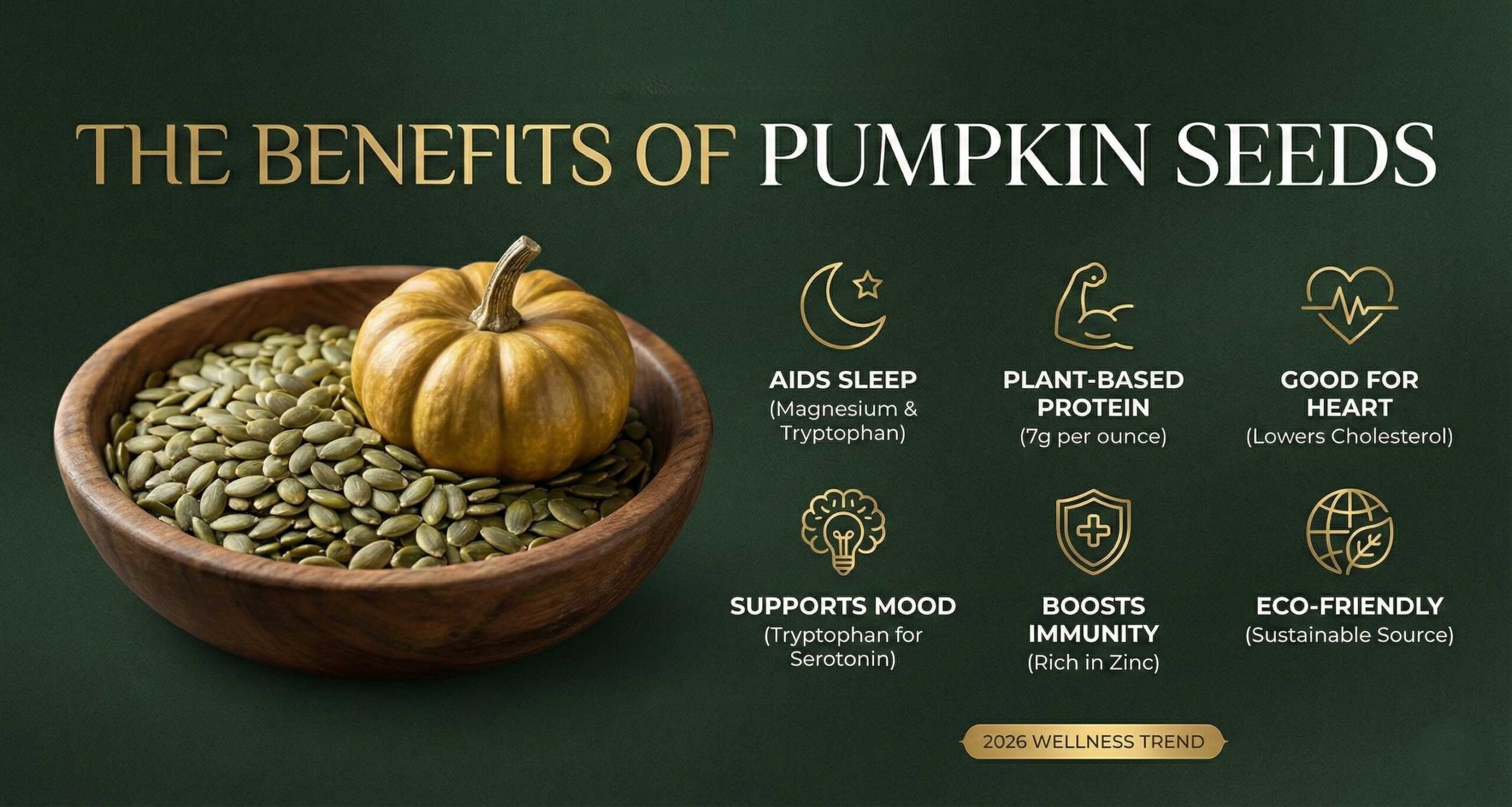
Benefits of Pumpkin seeds are reshaping how manufacturers approach plant-based nutrition, functional foods, and sustainable ingredient sourcing. As consumers increasingly seek clean‑label, nutrient‑dense alternatives to traditional protein sources.
- Why are Pumpkin seeds gaining strategic importance?
The global food industry is moving decisively beyond protein sources dominated by whey, soy, and conventional dairy. Manufacturers and consumers alike are searching for plant-based ingredients that deliver meaningful nutrition without the environmental burden of animal agriculture or the allergen concerns increasingly associated with soy and dairy.
Pumpkin seeds kernels known as pepitas seeds, have quietly emerged as one of the most strategically important functional ingredients heading into 2026. What was once viewed as a garnish or snack has become a core input across protein snacks, dairy alternatives, bakery formulations, and functional foods.
For wholesale buyers and procurement teams, this shift is not driven by a single trend but by the convergence of three powerful forces: tightening sustainability expectations, rising consumer need for sleep and stress support, and the rapid expansion of seed-based dairy alternatives reshaping the plant-milk category.
- The nutritional architecture that creates market value
Pumpkin seeds deliver a level of nutrient density that few plant ingredients can match, explaining their accelerated adoption across multiple product categories.
A single ounce (approx. 28 grams) provides seven grams of protein, containing all essential amino acids and offering a balanced profile well suited for complementary plant-protein diets. Unlike many isolated plant proteins, this nutrition comes naturally packaged with approximately fifteen grams of healthy fats, primarily omega-6 linoleic acid and omega-9 oleic acid, an attribute that improves satiety and mouthfeel in finished products.
Mineral density is where pumpkin seeds clearly differentiate themselves from competing plant proteins. One-ounce supplies approx. 156 mg of magnesium, representing nearly 40% of daily requirements in a compact serving. This is particularly significant given that population-level data consistently show widespread magnesium shortfalls in Western diets, driving demand for food-based mineral delivery rather than traditional supplements.
Pumpkin seeds are also a notable plant source of zinc, providing roughly 20% of daily needs per ounce. Zinc bioavailability, often limited in plant foods by phytates, is comparatively favorable in pumpkin seeds especially when soaking or light roasting is applied during processing. This makes them especially attractive for immune-support positioning in functional foods.
The presence of tryptophan, an essential amino acid involved in serotonin and melatonin synthesis, underpins pumpkin seeds’ growing relevance in sleep-focused and evening-snack munchies. When consumed alongside carbohydrates a natural pairing in many snack items tryptophan uptake into the brain is enhanced, supporting mood regulation and sleep quality. Magnesium further complements this effect through its role in neurotransmitter function, creating a nutritionally coherent foundation for sleep-health applications.
- The 2026 trends driving B2B demand
Sustainability has moved from marketing language to procurement requirement. Food manufacturers supplying European and UK markets now face increasing scrutiny from regulators, retailers, and institutional buyers demanding measurable reductions in environmental impact.
Pumpkin seeds kernels offer compelling sustainability economics. They are typically produced as a co-product of winter squash cultivation, allowing protein and oil yield to be extracted from existing agricultural systems rather than dedicated monocropping. Lifecycle assessments consistently show that pumpkin seed protein requires dramatically less water, land, and emissions than animal-based proteins, while remaining competitive with or even superior to many nut-based alternatives.
This efficiency has particular relevance as climate volatility exposes supply-chain risks associated with water-intensive crops. Compared with almonds or dairy, pumpkin seeds offer a more input for brands seeking long-term ingredient security.
At the same time, the functional snacking need has created space for pumpkin seeds to act as both base ingredient and product differentiator. Traditional seed blends such as Indian mukhwas are being marketed by modern brands as digestive and wellness snacks, combining roasted kernels with chia, watermelon seeds, and Sunflower seeds. These mukhwas appeal simultaneously to variety of consumers seeking familiar flavors to seed-based traditional mukhwas for the first time.
Perhaps the most significant growth opportunity lies in seed-based dairy alternatives. While oat and almond milk dominate volume, their nutritional limitations have opened space for new sources. Pumpkin seed milk offers higher inherent protein, a naturally creamy texture, and freedom from common allergens, often requiring fewer stabilizers to perform in barista and food-service applications. High-growth seed-based dairy alternatives expanded rapidly through 2025, with pumpkin seed kernels and oil gaining traction in premium and functional segments.
- Health benefits creating purchase intent
Cardiovascular health remains a main point of food consumption and its development. Pumpkin seeds contain naturally occurring phytosterols, including beta-sitosterol, which have demonstrated LDL-cholesterol-lowering effects in human dietary studies when consumed at achievable food-based intakes. Their magnesium contribution further supports cardiovascular function through blood-pressure regulation and vascular relaxation.
Sleep quality has emerged as another key positioning area. Diets incorporating tryptophan-rich foods consumed alongside carbohydrates have been associated with improvements in sleep latency and sleep structure. Magnesium’s role provides an additional, complementary pathway, allowing food producers to manufacture food items which helps and support sleep, into everyday snack items.
Immune health has also moved to the forefront of consumer awareness. Zinc’s role in immune cell development and inflammatory regulation is well established, yet many diets fall short of recommended intake. Pumpkin seeds offer a food-first solution to this gap, aligning with consumer preference for nutrition delivered through whole ingredients rather than pills.
- The B2B wholesale perspective for 2026
From a procurement standpoint, pumpkin seeds and its kernels present a rare combination of nutritional value, market momentum, and supply-chain stability. The global pumpkin seed market is firmly established in the multi-million-dollar range and continues to expand at a healthy, high-single-digit compound annual growth rate. Demand spans snack foods, protein bars, dairy alternatives, bakery inclusions, and functional blends indicating durable growth rather than short-term trend volatility.
Sourcing strategy plays a critical role in value realization. European origins, particularly Austria and Hungary, command premium pricing due to established organic certification systems and hull-less varieties such as Styrian pumpkin seeds. At the same time, Indian and Chinese suppliers offer cost-competitive alternatives with improving quality controls and growing availability of GMP-certified processing facilities.
Wholesale specifications increasingly determine whether material is positioned as commodity or premium. High-quality pepitas typically maintain oil content between 45% and 50%, driving both flavor intensity and oxidative stability. Moisture levels are commonly specified below 7%, with premium buyers requesting 5% or lower to support extended storage and distribution.
Food-safety compliance has become non-negotiable. Buyers now routinely require comprehensive mycotoxin screening, including aflatoxin panels, alongside heavy-metal testing such as cadmium—particularly for European-destined shipments following regulatory tightening in 2024. Suppliers able to provide batch-specific certificates of analysis from accredited laboratories consistently gain preferred access to high-value channels.
- Pro tip for food manufacturers
Lightly roasting pumpkin seeds at 160°C for 12–15 minutes enhances flavor development while improving mineral bioavailability. For bulk storage and ingredient applications, nitrogen-flushed or oxygen-reduced packaging is recommended to protect the delicate fatty-acid profile and extend shelf life.
- Preparing for 2026
As food brands reconfigure their protein strategies around sustainability, functionality, and clean-label performance, pumpkin seeds are moving from supporting role to strategic ingredient. Their ability to deliver protein, minerals, functional benefits, and environmental efficiency positions them at the center of the next wave of plant-based innovation.
If you are exploring premium pumpkin seed sourcing for 2026 product development, our wholesale team offers detailed specifications, sample evaluation tailored to food manufacturers and health-focused brands.
If you are looking to source pumpkin seeds or pumpkin seeds kernels, and wondering what the best competitive price to your nearest port is? kindly send us an email to info@linearkglobal.com or WhatsApp.



0 Comments